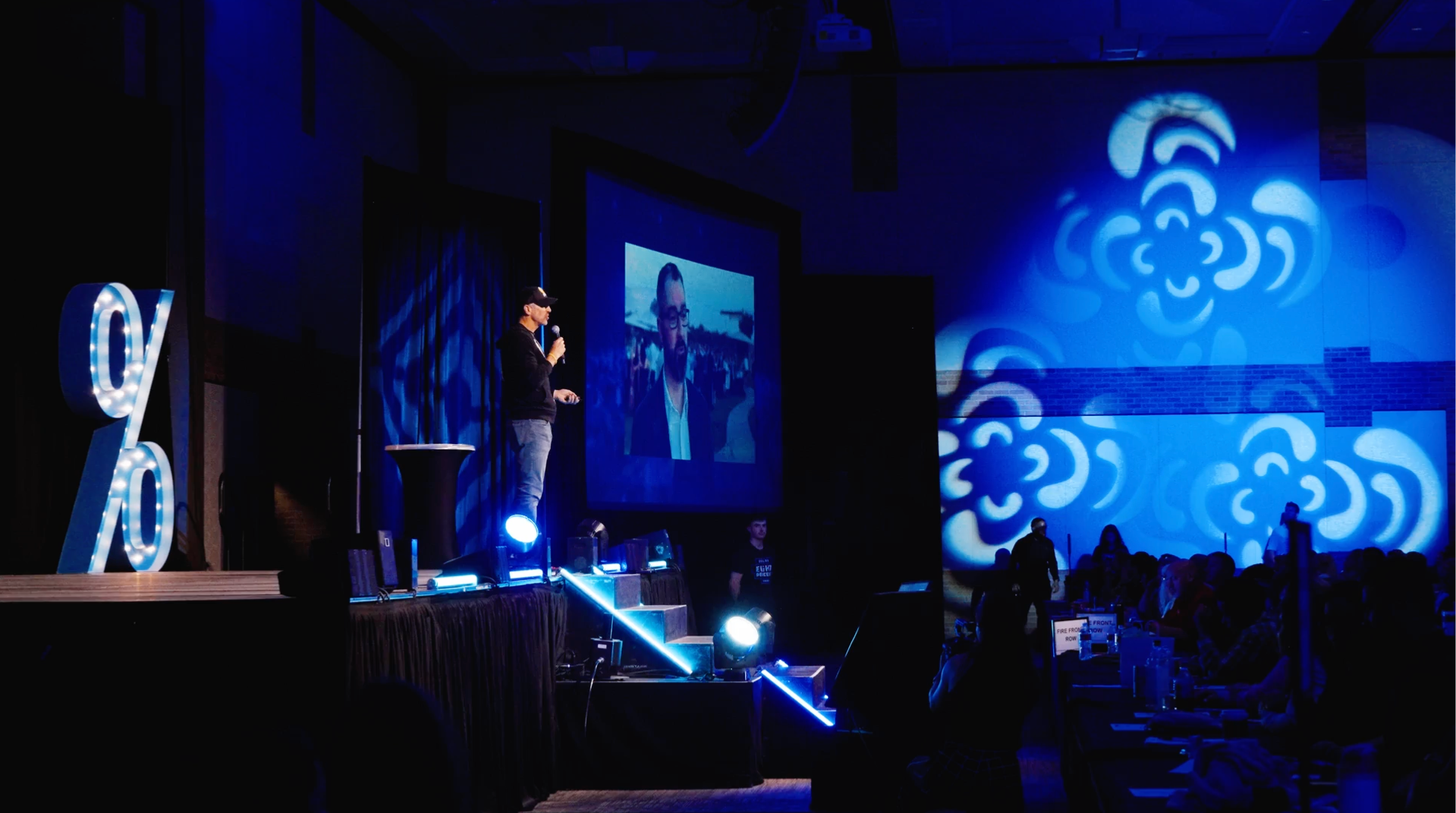
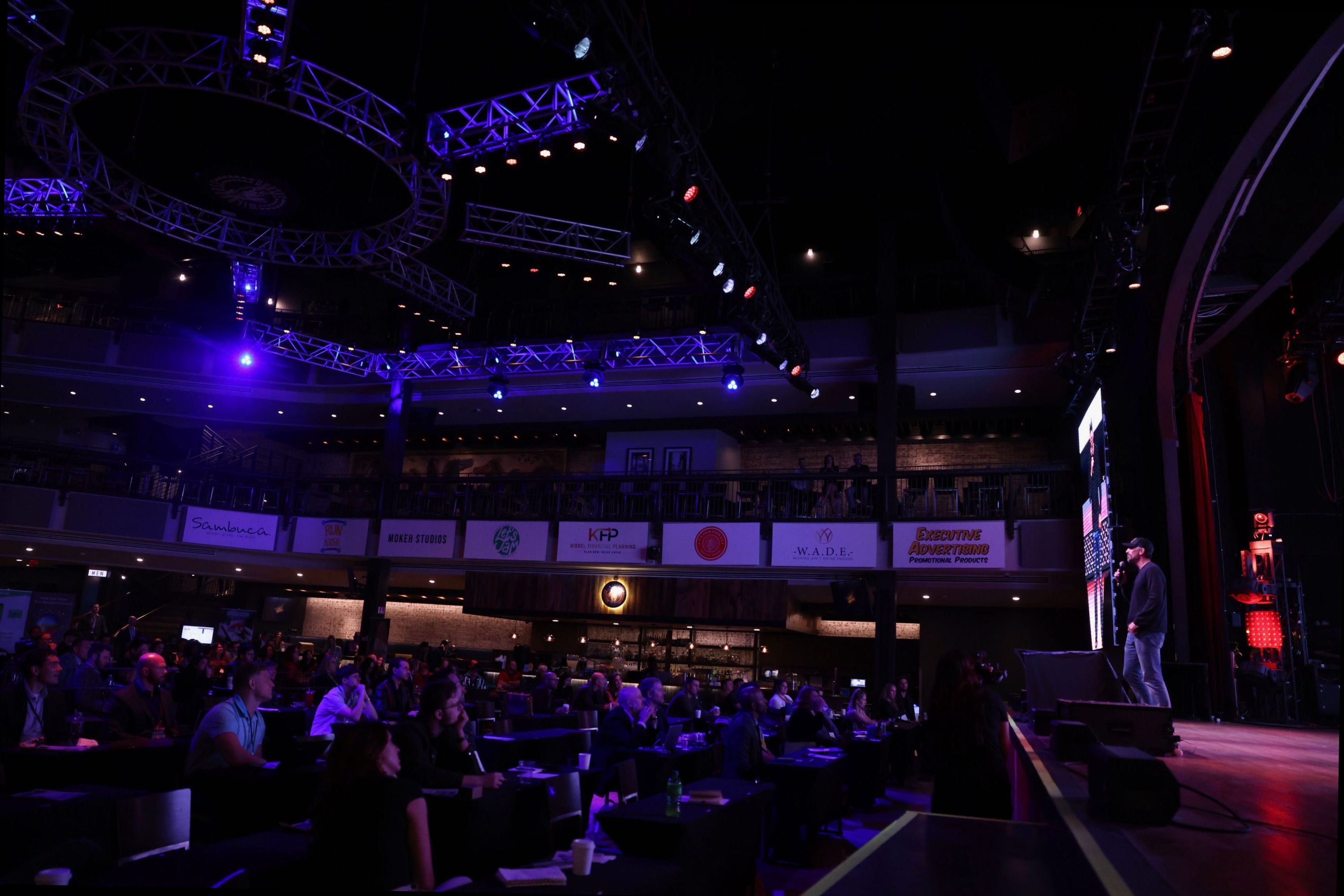
International Keynote Speaker & Communication Coach
Do you believe how we communicate is important?
Master the Conversations That Build Trust, Influence & Results
Jamie Miller teaches professionals, leaders, and entrepreneurs how to communicate more consciously so they can ask better questions, build trust faster, create stronger connections, and get better outcomes from the conversations that matter.
More than two decades of speaking, coaching, observing, and learning what
actually works in real conversations.
500+
Live Stages & Speaking Environments
From conferences and professional events to rooms where communication really
matters.
20+
Years Studying Communication
Observing what people say, ask, hear, miss, and respond to in real conversations.
12+
Professional Sectors
Experience across industries including financial services, real estate, sales,
leadership, and professional organizations.
100%
Built Around Real-World Communication
Jamie's teaching comes from real speaking, coaching, conversations, and practical experience. Not theory alone.
Cross-Industry Application
Where Has Jamie Applied Conscious Communication?
From corporate boardrooms and financial institutions to specialized keynotes and
high-stakes professional environments.
Executive & Corporate Leadership
Financial Services & Banking
Healthcare & Medical Organizations
Fraud Examiners & High-Stakes Investigation
Real Estate & Commercial Development
Technology & Innovation Leaders
Sales & High-Stakes Negotiation
Keynote Summits & Professional Associations
Public Sector & Non-Profit Leadership
Executive & Corporate
Leadership
Financial Services &
Banking
Healthcare & Medical
Organizations
Fraud Examiners & High-Stakes
Investigation
Real Estate & Commercial
Development
Technology & Innovation
Leaders
Sales & High-Stakes
Negotiation
Keynote Summits & Professional
Associations
Public Sector & Non-Profit
Leadership
“
It's always been understood that how we leave people feeling is crucial! Given the technology that exists in today's world, it's especially more important now more than ever we appreciate the ultimate separation in what we achieve in business is going to be based on our level of Emotional Intelligence and ability to engage human to human with authenticity and vulnerability at the core!
Jamie Miller·International Keynote Speaker & Founder, Art of Conscious
Communication
Have you ever known exactly what you wanted to say... and still not gotten the response you expected?
Knowing Your Business Isn't The Same As Knowing How To Communicate It.
You can know your industry, understand your service, and be great at what you do. But if the other person doesn't understand you, trust you, respond to you, or take the next step, the conversation still didn't do what you needed it to do.
Breakdown 01
You Know What You Mean. Do They?
You explain something that feels perfectly clear in your head — but the other person walks away confused,
uncertain, or with a completely different interpretation.
What happens next: More explaining. More follow-up. Less action.
Breakdown 02
You're Talking. They're Still Not Buying In.
Facts, expertise, and credentials matter. But people still make decisions based on how the conversation
feels, what they trust, and whether they feel understood.
What happens next: Good conversations that go nowhere.
Breakdown 03
Sometimes The Problem Isn't What You Said.
Your tone, timing, body language, reactions, and the questions you don't ask can change a conversation
before either person realizes what's happening.
What happens next: Distance, resistance, misunderstanding. Sometimes without anyone knowing why.
Are you reacting to the conversation... or actually paying attention to
it?
Reactive Communication vs. Conscious Communication
Most people don't realize how quickly they react in conversations. Tone changes. Assumptions show up.
Defensiveness kicks in. Conscious Communication starts when you notice those reactions and choose what
happens next.
Reactive CommunicationWhen habit, emotion, and assumption take over.
Emotionally Flippant: Responding too quickly, letting tone or emotion take
over, and saying something before considering how it may land.
Listening To Reply: Thinking about what you're going to say next instead of
actually listening to what the other person is showing or telling you.
Defending Instead Of Understanding: Trying to prove your point, protect your
position, or win the conversation before understanding what the other person actually needs.
Conscious CommunicationWhen awareness comes before reaction.
Pause Before You Respond: Notice your tone, body language, emotion, and timing
before deciding what the conversation needs next.
Listen For More Than Words: Pay attention to what is being said, and what is not being said, through questions, body language, tone, and behavior.
Choose The Next Best Action: Instead of trying to win the conversation, focus
on what would create trust, clarity, understanding, or the right next step.
So how do you actually become more conscious in the way you
communicate?
Jamie's approach starts with a few fundamentals he's spent more than two decades studying, testing, and
teaching.
Part 1 — The Foundation
Everyone loves things in threes.
The 3 Things Jamie Focuses On In Conscious Communication
After more than two decades of speaking, coaching, observing, and testing what works in real conversations,
Jamie keeps coming back to three things: what people see, what you notice, and what happens next.
01
What People See
Before you finish your first sentence, your posture, eye contact, expression, energy, and physical
presence are already communicating something.
Become more aware of your body language
Notice non-verbal reactions from others
Create trust before relying only on words
02
What You Notice
Good communication is not only about hearing the sentence. It is noticing tone, behavior, hesitation, body
language, and the things the other person may not be saying directly.
Listen instead of preparing your reply
Ask better, more intentional questions
Notice tone, behavior, and what is underneath
03
What Happens Next
Every conversation has a next step. The question is whether you're conscious of what that next step
actually is.
Know what outcome matters right now
Guide the conversation toward the right next action
Create clarity instead of forcing agreement
Want to see how these three things change a real conversation?
Jamie breaks them down live in the Free Communication Masterclass.
Who Is Jamie Miller - And Why Does He Teach Communication?
For over two decades, Jamie Miller has paid close attention to what makes conversations work and what causes them to break down. On stages across the world, in corporate boardrooms, and through one-on-one coaching, he has observed how people speak, what they ask, and how others react.
He noticed a recurring pattern: most professionals who struggle in high-stakes conversations aren't lacking expertise or intelligence. They were simply never taught how to communicate consciously, read non-verbal reactions, or guide dialogue with clarity.
"Great communication is never about saying more. It's about creating understanding, building trust, and
leading conversations that produce meaningful next steps."
In 2018, Jamie launched The Art of Conscious Communication to bring these practical principles
to professionals across diverse fields. His coaching has reached financial advisors, insurance and
mortgage professionals, Realtors, attorneys, entrepreneurs, business owners, and sales teams.
*Jamie is not affiliated with or employed by any financial institution. He works as an independent
external communication coach with financial professionals.
20+ Years Experience
International Keynote Speaker
Founder, Art of Conscious Communication
Behavioral Psychology & NLP Applications
Do You Love A Bit Of Clarity?
So What Does Jamie Actually Help People Do?
Jamie teaches people how to communicate more consciously: on stage, in meetings, over the phone, in writing, at work, and in the conversations that matter outside of work too.
The situation may change. The fundamentals usually don't: awareness, better questions, trust,
timing, body language, clarity, and knowing what needs to happen next.
Capability 01
Presentations & Speaking
Learn how to communicate with more awareness when you are presenting to a room, leading a meeting, or speaking from a stage.
Presentations & Speaking
Learn how to communicate with more awareness when you are presenting to a room, leading a meeting, or speaking from a stage.
Client & Sales Conversations
Ask better questions, build trust, communicate value more clearly, and become more conscious of what the conversation actually needs next.
Calls, Emails & Follow-Up
Turn generic outreach into communication that gives the other person a reason to respond — whether you are calling, emailing, following up, or starting a conversation online.
Interviews, Networking & Opportunities
Communicate in a way that helps people understand who you are, remember you, and know what the right next step should be.
Relationships & Difficult Conversations
Communication does not stop when work ends. Jamie's principles can help people become more aware of how they listen, react, ask questions, and communicate with the people who matter to them.
Body Language, NLP & Human Behaviour
Become more aware of body language, tone, behaviour, and communication patterns — and learn how Jamie applies NLP concepts with ethics, integrity, and good intentions.
1 of 6
Still wondering whether communication affects almost everything we do? Exactly.
Most people think they always need to sell themselves, their company, or their service. Jamie teaches something simpler: first understand what the conversation actually needs next. Sometimes the only thing you're trying to 'sell' is the next action. Conscious Communication means knowing what the conversation needs now, not trying to force where you eventually want it to go.
At A Networking Event
Common Mistake
Trying to sell yourself immediately.
Jamie's Perspective
You may only need to create enough interest for someone to want another conversation.
Next Action
Get the number. Get the meeting. Keep the relationship moving.
Sending A LinkedIn Message
Common Mistake
Trying to explain everything you do in the first message.
Jamie's Perspective
The message may only need to make the other person curious enough to talk.
Next Action
Move the message to a phone call.
Talking With A Potential Client
Common Mistake
Trying to close before the other person understands the value.
Jamie's Perspective
First understand where they are, what matters to them, and what decision actually makes sense next.
Next Action
Move the conversation forward, not force the finish.
Sending An Email
Common Mistake
Writing everything you want to say instead of thinking about what would make someone respond.
Jamie's Perspective
Before writing the email, ask what action you actually want from the person.
Reading about communication is one thing. Watching Jamie work a room, ask questions, react in real time, and connect with an audience is another. This is where Conscious Communication becomes easier to understand.
Live Stage Excerpt3:45 Mins
Visitor Segmentation
Have You Already Seen Jamie Speak?
You've already heard Jamie speak, nodded your head a few times, and hopefully learned something useful. You probably don't need to start from the beginning.
You're likely ready to decide what you want to do next.
If you've already watched another 10 or 15 Jamie videos too, we're probably well past introductions.
Path 01: Warm Visitor
Already Know Jamie?
You've seen him speak, watched the videos, heard the ideas, or been referred by someone who thinks you should know him. You're probably ready for the next step.
We're organizing the best direct next-step options for people who have already experienced Jamie. In the meantime, see Jamie in action or explore his core methodology below.
Do you ever think about what actually needs to happen next in a conversation?
4 Things To Pay Attention To In A Conversation
Good conversations usually don't fall apart because someone didn't know enough. They fall apart because people miss what's happening in the moment. Jamie teaches people to pay attention to four things as a conversation moves forward.
01
Awareness
Before you respond, notice what's happening: your tone, your body language, the other person's reaction, and the direction the conversation is taking.
Ask yourself
"What's happening right now?"
02
Connection
People are more likely to listen, trust, and engage when they feel understood. Connection starts with listening, asking better questions, and showing that you're paying attention.
Ask yourself
"Do they feel heard and understood?"
03
Clarity
Know what you're trying to say, and make sure the other person understands it the way you intended.
Ask yourself
"Is this actually clear to them?"
04
Influence
Influence isn't about forcing someone to agree. It's about creating enough trust and clarity that the right next step makes sense.
Ask yourself
"What's the right next step from here?"
Want to see what this looks like in a real conversation?
Jamie teaches these ideas live, with examples you can actually use.
Conscious Communication Is Not Just For Speakers Or Executives
You do not need to be on a stage or running a company to benefit from communicating more consciously. Jamie works with people who need better conversations: with clients, teams, prospects, colleagues, family, and sometimes themselves.
Would you appreciate a training that is practical, authentically human, and free?
Join Jamie Miller's Free Communication Masterclass
Join Jamie for a virtual session where he breaks down communication ideas you can actually use in client conversations, meetings, presentations, sales, relationships, and everyday situations.
You do not need to prepare anything. Just show up, listen, think, ask yourself a few better questions,
and leave with something you can try immediately.
Virtual · 100% Free · Practical Communication Training
01
Ask Better Questions
Learn how better questions can create more useful, honest, and productive conversations.
02
Build Trust More Consciously
See how tone, body language, listening, and awareness affect the way people respond to you.
03
Stop Reacting On Autopilot
Recognise habits that cause conversations to become defensive, unclear, or unnecessarily difficult.
04
Know What The Next Step Is
Become more intentional about what you are actually trying to accomplish in the conversation.
Do I have your attention based on anything you have read so far? Good. You are in luck.
Useful for professionals, entrepreneurs, leaders, salespeople, speakers, and anyone who simply wants better conversations.
Reserve Your Free Seat
Enter your details below and we'll tell you exactly what happens next.
🔒 100% Free Registration · No Spam · Unsubscribe Anytime
Taught Directly By Jamie Miller
International Keynote Speaker & Communication Coach
Jamie Miller Live Keynote & Masterclass Excerpt
Experience how conscious presence, calibrated tone, and intentional dialogue build trust and produce
decisive results.
😊
Are you looking at this on your phone? If so, just know this looks a lot different on a laptop.